
"cultivation techniques"
2000 article(s) found

Cultivation techniques of small Coffee knowledge of Coffee planting
Prevention and treatment methods: ① strengthen management, reasonable pruning, appropriate shade. ② artificially killed adults and larvae, cut off the damaged branches and burned them in time. two。 Coffee leopard bark moth. It is widely distributed and is one of the common coffee pests, which can harm a variety of cash crops. The larvae overwintered in the branches, and the larvae often ate upward in the branches, forming a tunnel of 30cm to 60cm. Prevention and control methods:

The technique of growing small Coffee-- integral pruning
Cultivation technique of small-grain coffee: integral pruning. Single trunk plastic surgery is a method of cultivating a trunk, using the primary branch as the backbone branch and the secondary and tertiary branches as the main fruiting branch.
Arabica cultivation techniques: soil management
Weeding, covering young coffee garden, weeds are easy to breed, especially in rainy season, weeding should be once a month. If there is sufficient labor, remove the weeds first. Adult coffee gardens can be weeded once every 2 to 3 months. Such as the use of herbicides should be careful not to spray coffee leaves, in young coffee garden use more important caution. Coffee root shallow, vulnerable to high temperature and drought and other adverse climatic conditions
Cultivation techniques of small-grain Coffee
Disease control: 1. Coffee rust is the main disease of coffee, the most harmful, the damaged plants, light reduced yield, heavy death. Coffee rust is mainly harmful to leaves and sometimes to young fruits and twigs. After the leaves were infected, many light yellow spots appeared at first and enlarged in the form of water stains, followed by orange-yellow powdery spores on the back of the leaves, and there was a light green halo around the disease spots, and the disease spots in the later stage.

Coffee tree history coffee morphological characteristics coffee cultivation techniques
Coffee tree is a shrub or small tree of Rubiaceae; leaves opposite, leathery, long oval; every March, branches will emerge white flowers, petals spiral arrangement, flower center around the petals jump, a closer look, really like childhood play with the small windmill, issued bursts of jasmine fragrance; fruit is oval, berry, dark red, hidden two seeds, that is, we are familiar with coffee

Introduction to the Development History of cultivation and planting techniques for Coffee seedlings
Coffee planting technology introduces the origin of coffee trees in Ethiopia in Africa. In botany, coffee trees belong to the evergreen trees of the subgenus Rubiaceae, and coffee beans, commonly known as coffee beans, are the seeds of the fruit of coffee trees, just because they are shaped like beans, so they are called coffee beans. Climate is the decisive factor for coffee cultivation, and coffee trees are only suitable for growing in the tropics or subtropics.

Cultivation techniques of small-grain Coffee in Yunnan Province: pest Control
1. Coffee tiger, longicorn beetle. The coffee tiger longicorn beetle harms the coffee trunk for more than 2 years. At first, it eats between the cambium and xylem, and then eats the xylem. It has a great effect on coffee, the light ones make the plants yellow, withered branches and fruit drop, and the serious ones die of the whole plant. At the initial stage of the damage, there was no obvious hole in the appearance, but only slightly raised in the epidermis of the injured area. Prevention and control methods: strengthening the management of ①
Cultivation Techniques of Coffea arabica in Yunnan
Control methods: ① strengthen management, reasonable pruning, appropriate shade. (2) Artificial killing of adults and larvae, timely cutting down and burning of damaged branches. 2. Coffee leopard wood moth. It is widely distributed and is one of the common coffee pests, which can harm a variety of economic crops. The larvae overwinter in the branches, and the larvae often eat upward in the branches, forming a tunnel of 30~60 cm. Prevention methods: ①

Cultivation techniques of small Coffee in Yunnan Province Pest Control of Coffee trees
1. Coffee tiger, longicorn beetle. The coffee tiger longicorn beetle harms the coffee trunk for more than 2 years. At first, it eats between the cambium and xylem, and then eats the xylem. It has a great effect on coffee, the light ones make the plants yellow, withered branches and fruit drop, and the serious ones die of the whole plant. At the initial stage of the damage, there was no obvious hole in the appearance, but only slightly raised in the epidermis of the injured area. Prevention and control methods: strengthening the management of ①

Cultivation techniques of small Coffee in Yunnan Province Coffee Tree Disease Control
1. Coffee rust is the main disease of coffee, the most harmful, the damaged plants, light reduced yield, serious death. Coffee rust is mainly harmful to leaves and sometimes to young fruits and twigs. After the leaves were infected, many light yellow spots appeared at first and enlarged in the form of water stains, followed by orange-yellow powdery spores on the back of the leaves, and there was a light green halo around the disease spots, which gradually expanded or connected in the later stage.

Cultivation techniques of small-grain Coffee in Yunnan Province: disease Control
1. Coffee rust is the main disease of coffee, the most harmful, the damaged plants, light reduced yield, serious death. Coffee rust is mainly harmful to leaves and sometimes to young fruits and twigs. After the leaves were infected, many light yellow spots appeared at first and enlarged in the form of water stains, followed by orange-yellow powdery spores on the back of the leaves, and there was a light green halo around the disease spots, which gradually expanded or connected in the later stage.

What is organic coffee? Is there any advantage in drinking organic coffee? Flavor characteristics of Organic Coffee
Professional coffee knowledge exchange more coffee bean information please pay attention to the coffee workshop (Wechat official account cafe_style) Organic coffee in the cultivation does not use any insecticides and other chemicals to treat pests or cultivation problems, but the use of natural methods, such as the use of natural composting, hedgerow, pruning and other methods to maintain the growth of coffee trees, in terms of pest control
The technique of planting small Coffee-- Multi-dry shaping and Culture
Multi-dry shaping is a method of shaping using the first-order branch as the main fruiting branch. The purpose of plastic surgery is to cultivate multiple trunks and grow a large number of robust primary branches, and the multi-trunk trees will not be topped. As a result, when the yield decreases after 3-5 years, the new trunk will be replaced.

Planting knowledge of Coffee trees guided by cultivation techniques of small Coffee
Small-grain coffee is a shrub of Rubiaceae, which is suitable for planting in areas with an annual average temperature of 19 ℃ ~ 21 ℃ and an altitude of 800-1400m. It has the advantages of fast plant growth, early fruit and high yield. The land preparation should choose the contour platform with deep soil layer, loose and fertile soil, clean wind, sufficient light and shade trees, annual rainfall of 700 to 1600 mm, slope of less than 30 degrees, and row spacing of 2 to 3 meters.

Cultivation techniques of small Coffee guiding the selection of Coffee Bean varieties
Small-grain coffee is a shrub of Rubiaceae, which is suitable for planting in areas with an annual average temperature of 19 ℃ ~ 21 ℃ and an altitude of 800-1400m. It has the advantages of fast plant growth, early fruit and high yield. The land preparation should choose the contour platform with deep soil layer, loose and fertile soil, clean wind, sufficient light and shade trees, annual rainfall of 700 to 1600 mm, slope of less than 30 degrees, and row spacing of 2 to 3 meters.

4C Association Coffee Certification Coffee Bean Certification quality Coffee
About the translator: Mo Lizhen (1966 ~), female, bachelor degree in agriculture, has been engaged in scientific research, production techniques, training and cup products of small seed coffee in Pu'er since 1988. He has published many papers in Tropical crop Research, Yunnan Hot farming Science and Technology and Tropical Agricultural Science, and published a monograph on High yield and quality cultivation techniques of small seed Coffee. 4C certification

Basic knowledge of coffee planting techniques and matters needing attention of coffee trees
The origin of the coffee tree is Ethiopia in Africa. In botany, coffee trees belong to the evergreen trees of the subgenus Rubiaceae, and coffee beans, commonly known as coffee beans, are actually the seeds of the fruit of coffee trees. They are called coffee beans only because they are shaped like beans. Climate is the decisive factor for coffee cultivation. Coffee trees are only suitable for growing in the tropics or subtropics, so latitude 25 degrees south and north.

A brief introduction to Coffee planting History and planting techniques
According to historical records, coffee trees were first planted in Taiwan in 1884, and coffee cultivation in mainland China began in Yunnan. In 1902, a French missionary named Tian introduced seeds from Yinggong County in Binchuan County, Yunnan Province. it was successfully planted in a place called Zhu Kula, which is located on the bank of the Yushan River, a tributary of the Jinsha River. The commercial cultivation of coffee in Yunnan began in 1985, but its development is slow.
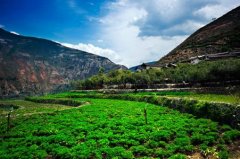
Cultivation techniques of Baoshan small-grain Coffee
I. the environmental conditions required by small-grain coffee originated in Ethiopia in north-central Africa, located in 69 N, 3440 E, 13001900m above sea level, with 16001900mm precipitation and an average annual temperature of 20 ℃. In the process of long-term evolution, coffee has specific requirements for environmental conditions due to the joint action of biology and climate.